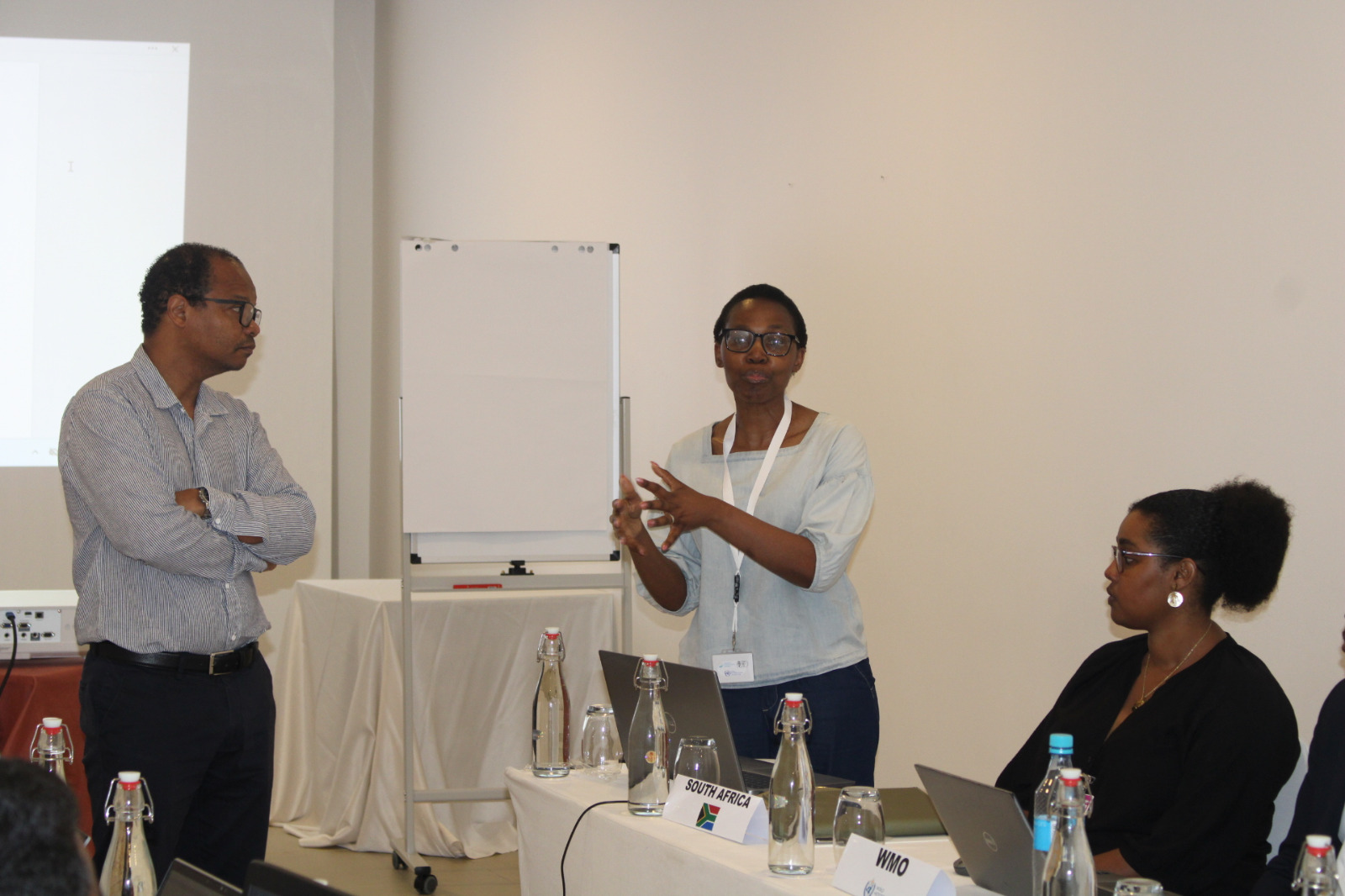
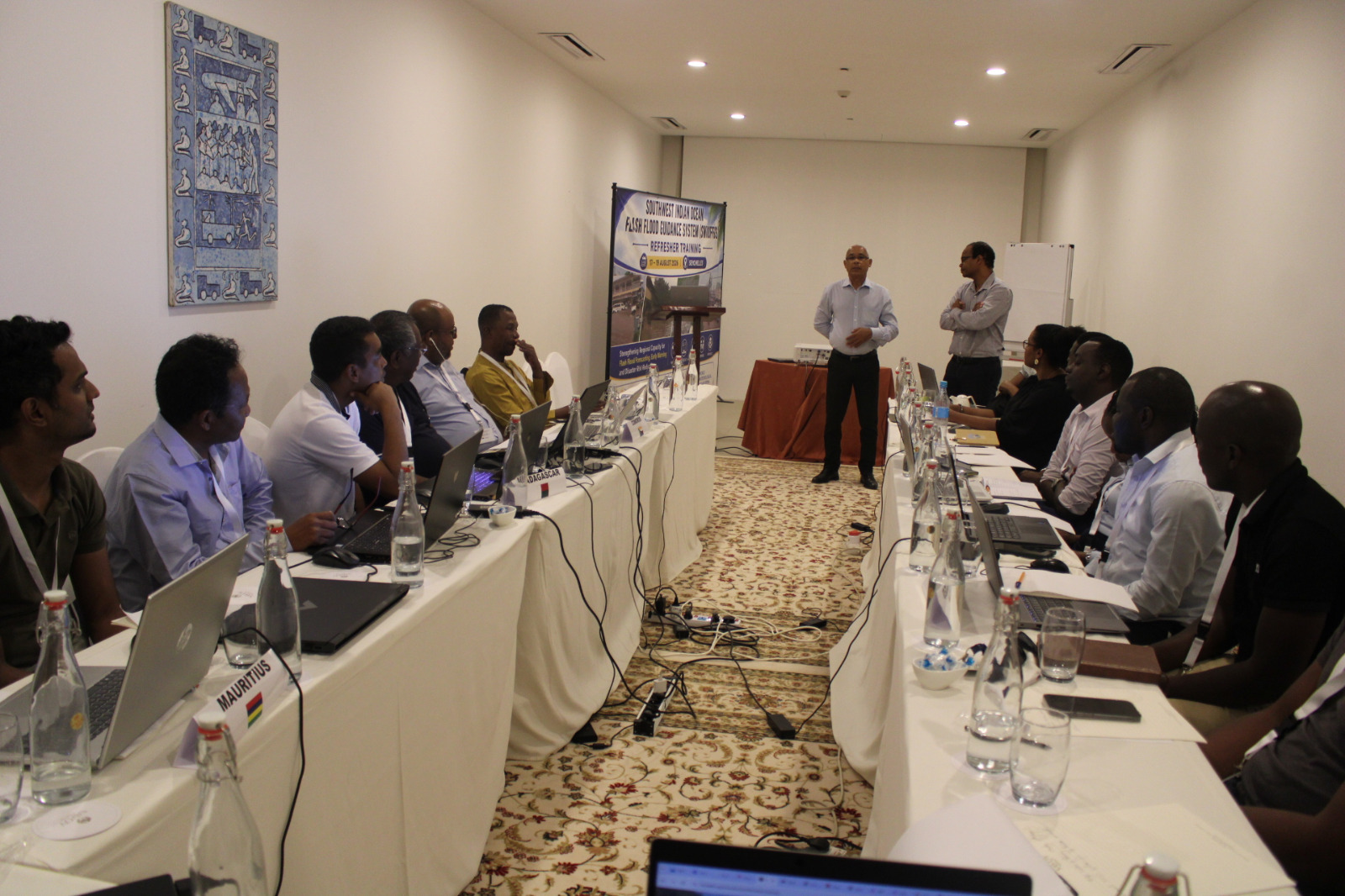
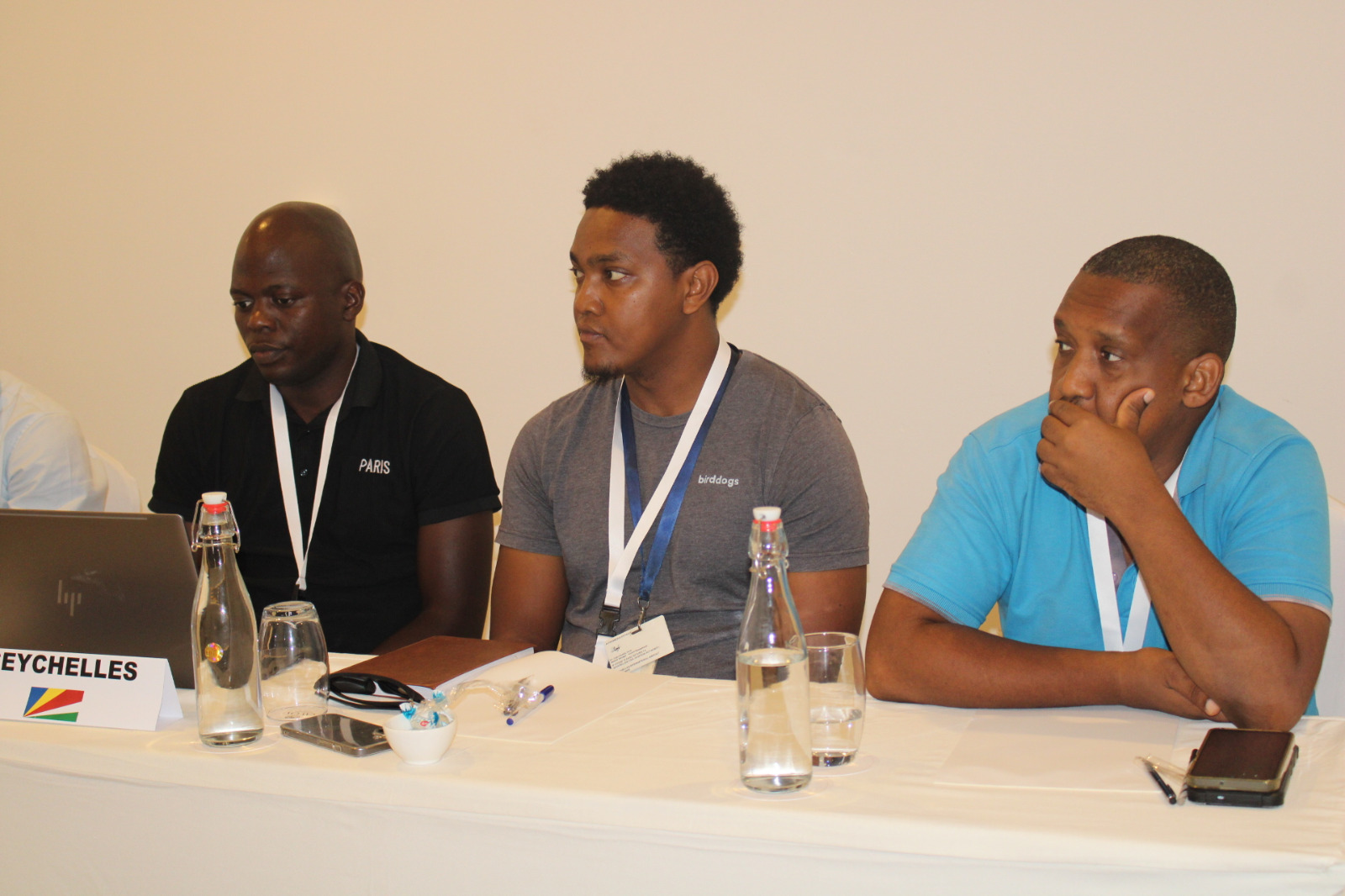
Representatives from countries across the Southwest Indian Ocean region gathered in Seychelles from 17 to 19 August 2026 for a refresher training on the Southwest Indian Ocean Flash Flood Guidance System.
The three-day Southwest Indian Ocean Flash Flood Guidance System (SWIOFFGS) Refresher Training brought together representatives of participating Southwest Indian Ocean countries, the World Meteorological Organization (WMO), regional trainers from the South Africa Weather Service (SAWS), technical experts and staff of the Seychelles Meteorological Authority (SMA). The refresher training builds from previous SWIOFFGS training sessions conducted by the Hydrologic Research Center (HRC) from the United States in 2024 and 2025.
Organised in Seychelles with the support of WMO, the training provided participants with an opportunity to consolidate and update their operational knowledge of SWIOFFGS, review relevant procedures and practices, and exchange experiences in flash-flood monitoring, forecasting and early-warning services.
The Flash Flood Guidance System is an important operational tool for National Meteorological and Hydrological Services across the region. It combines rainfall information with hydrological and soil-moisture data to help forecasters assess whether current or expected rainfall could lead to flash flooding. This capability is particularly important in the Southwest Indian Ocean, where intense rainfall can develop rapidly and affect small catchments within a short period. By providing guidance on the potential response of the ground and catchments to rainfall, the system supports more informed and timely warning decisions. FFGS provides forecasters with additional and new approaches to analysing and interpreting meteorological data and information and therefore complements other systems used to improve flash-flood forecasting.
With FFGS, it does not mean that the forecast can never be wrong. No forecasting system in the world can guarantee 100% accuracy. However, FFGS significantly reduces the likelihood of forecasting errors and provides more timely, reliable, and impact-based forecasting capabilities to support decision-making and early action.
For Seychelles, SWIOFFGS is especially valuable because of the country’s exposure to flash floods and landslides. The steep terrain of the granitic islands, combined with intense rainfall and rapid surface runoff, can cause water levels to rise quickly and increase the risk of flooding in low-lying and built-up areas. Prolonged or heavy rainfall can also contribute to slope instability and landslides.
A key element of the system is its ability to provide information on the level of soil saturation. Rainfall falling on dry soil may be partially absorbed, while the same amount of rainfall falling on already saturated ground can quickly generate surface runoff and flooding. High soil saturation can also increase the likelihood of slope failure, making this information important when considering both flood and landslide warnings.
The refresher training further strengthened cooperation among participating countries by allowing forecasters, technical personnel and trainers to share operational experiences, discuss common challenges and identify opportunities for improving the use of flash-flood guidance products.
SMA reaffirmed that continued investment in forecasting systems, technical capacity and regional collaboration is essential to providing timely and reliable warnings and protecting lives, livelihoods and infrastructure from flash floods and landslides.
Contributed by the Seychelles Meteorological Authority